
NEWS
Microsoft’s 8GB Surface Laptop Makes the 4GB Floor Look Hollow
Microsoft still lists 4GB for Windows 11, sells an 8GB Surface for everyday work, and now promises a memory diet after that laptop stalled on light tasks.

Microsoft’s 13-inch Surface Laptop now ships with 8GB of RAM, and Windows 11 used 4.2GB of it after a clean reboot. The company still publishes a 4GB install floor for the OS, and its own store page tells shoppers that 8GB is for everyday browsing and work.
That 8GB SKU was a price cut during a DRAM shortage, not a slip. After the laptop stalled on light tasks, Windows chief Pavan Davuluri put a memory diet for 8GB PCs on the calendar through the end of 2026.
4 GB Is Still the Official Windows 11 Floor
Microsoft’s hardware rules for installing Windows 11 have not moved with the product it actually sells. The Learn document, last updated on July 14, 2026, still asks for a 1GHz dual-core compatible 64-bit processor, 64GB of storage, TPM 2.0, UEFI firmware that can run Secure Boot, and 4 GB of memory or greater.
The consumer specifications page says the same 4GB figure. It also draws a second, much higher line for Copilot+ PCs, which need an NPU rated at 40+ TOPS, 256GB of SSD or UFS storage, and 16 GB of DDR5 or LPDDR5.
Those two numbers now sit beside a third one Microsoft is happy to take money for: 8GB in a first-party laptop. The 4GB floor is an eligibility gate for upgrades. It is not a promise that a current Windows 11 machine will feel right with a few apps open.
THREE RAM FLOORS MICROSOFT PUBLISHES AT ONCE
- Install floor: 4GB is still enough to install or upgrade to Windows 11.
- Surface base SKU: 8GB is what the 13-inch Laptop and 12-inch Pro now start at.
- Copilot+ PC: 16GB of DDR5 or LPDDR5 is required for the on-device AI feature set.
OEM support pages repeat the old floor as well. Dell still publishes a 4 GB floor on its Windows 11 matrix, next to TPM 2.0 and Secure Boot, which is how a five-year-old minimum keeps walking into new buying guides.
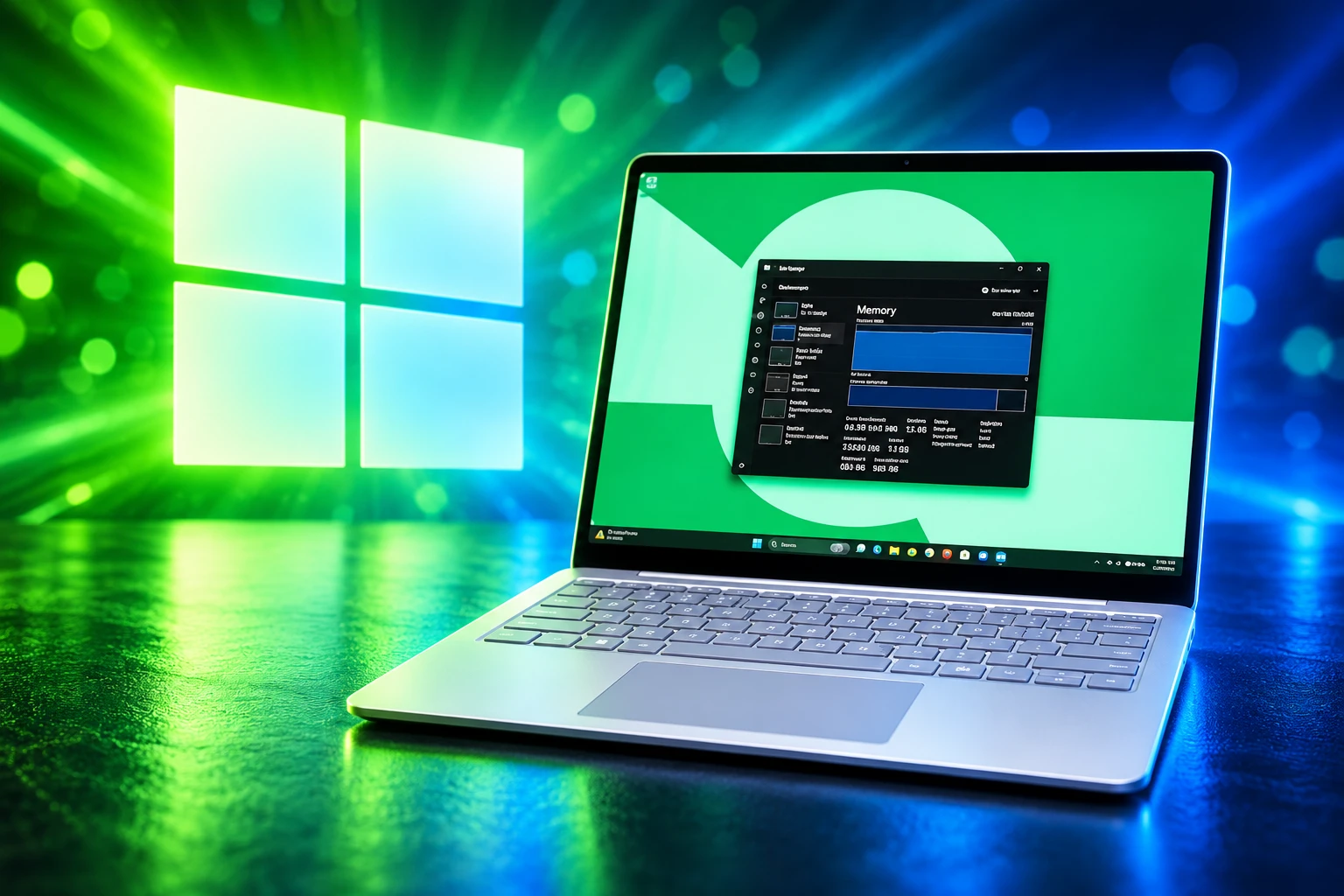
Microsoft Cut RAM to Keep a Sub-$1,000 Surface
The 13-inch Surface Laptop and 12-inch Surface Pro launched in 2025 as 16GB Copilot+ machines at $899 and $799. In April 2026, Microsoft raised those 16GB prices above $1,000. In late June it quietly added 8GB builds of the same last-gen Snapdragon X Plus hardware so the line could sit under $1,000 again.
The 8GB 13-inch Laptop listed at $949.99. The 8GB 12-inch Pro listed at $849.99. Nothing else about those chassis changed. They keep the 8-core Snapdragon X Plus, 256GB of UFS storage, and the same 13-inch 1920×1280 60Hz panel. They drop Copilot+ status, because that badge still needs 16GB.
The Microsoft Store configure page for the 13-inch model now says to choose 8GB RAM for everyday tasks like browsing and productivity, and to upgrade to 16GB for smoother multitasking, heavier apps, and Copilot+ features. The 8GB Platinum 256GB build shows $849.99, marked down from $949.99. The matching 16GB 256GB build is $1,149.99.
WHAT THE 13-INCH SURFACE SKUS COST
| Configuration | RAM | Copilot+ | Price |
|---|---|---|---|
| Surface Laptop 13-inch, 2025 launch | 16GB | Yes | $899 |
| Surface Laptop 13-inch, 8GB (as reviewed) | 8GB | No | $949.99 |
| Surface Laptop 13-inch, 16GB 256GB (Store) | 16GB | Yes | $1,149.99 |
| Surface Pro 12-inch, 8GB | 8GB | No | $849.99 |
The 8th Edition Surface Laptop, with Snapdragon X2 chips, still starts at 16GB and $1,599. The cheap SKU is a last-gen board with half the memory, sold so Microsoft can print a number that looks like an entry price while DRAM stays scarce.
HP has told investors that memory now makes up about 35% of a PC’s component cost, up from 15% to 18% a quarter earlier. Notebook makers who had been treating 16GB as the floor are putting 8GB back on spec sheets so a laptop can still be the cheap one on the shelf. Microsoft did that to its own brand first.
How Little Headroom 8 GB Leaves After Reboot
Laptop reviewer Antonio G. Di Benedetto spent days on the 8GB 13-inch. The chassis was the same machine he liked in 2025: tactile keyboard, strong trackpad, sharp 1080p webcam, and battery life that easily cleared 10 hours. The processor, a Snapdragon X Plus X1P-46-100, even has a slightly higher boost than last year’s X1P-42-100. The RAM is 8GB of soldered LPDDR5X. That was the whole change, and it showed up immediately.
WHAT TASK MANAGER SHOWED ON THE 8GB SURFACE
- After reboot: Windows used 4.2GB with almost no startup apps.
- Six Chrome tabs: Usage sat around 5.5GB once Signal was closed and extra desktops were left alone.
- Typical workday: The machine sat near 6.7GB of 7.6GB available, several times a day.
- The hang: A Teams call froze for several seconds when the host streamed a short video, with about 10 Chrome tabs, Slack, and Signal already open.
He also saw brief freezes in Google Docs with no call and no stream running. Premiere exports crashed. A Photoshop benchmark fell to 2887, against 4773 on the 16GB 2025 unit. Geekbench 6 multi-core dropped to 9421 from 11427 on that older 16GB board. He rated the 8GB model 6 out of 10.
8GB is not enough for a Windows laptop in 2026.
Antonio G. Di Benedetto, laptop reviewer, on the 8GB Surface Laptop 13-inch
Microsoft had told hardware writers the 8GB models would handle day-to-day work, browsing, and media. Light browsing and video did run. Living on a $950 laptop by counting tabs and avoiding a second desktop is a different product than the 16GB version of the same shell sold a year earlier.
Some of that 4.2GB at idle is cache Windows can drop. The freezes at 6.7GB of 7.6GB are not a cache display trick. Once the working set is that tight, a Teams video or a Docs tab is enough to stall the machine. An 8GB Windows PC can be a $599 budget box if the OS is actually small. It is a poor fit on a soldered Surface that still runs the full shell of Widgets, Teams, Outlook, and WebView2 apps.
Copilot+ Features Stay Behind a 16 GB Gate
The 8GB Surface still has a Qualcomm Hexagon NPU rated at 45 TOPS, which clears the 40+ TOPS Copilot+ silicon bar. It still fails the memory bar. Microsoft’s own specifications page is blunt: machines with fewer than 16GB, even with a fast NPU, are not Copilot+ PCs. They can run ordinary Windows 11 features and some local AI in apps. They do not get the Copilot+ set, including the fuller Click to Do tools and the improved Windows search that Microsoft uses to sell the class.
That split is now a sales ladder. Pay $200 more than the 8GB list price and the same 13-inch board becomes a Copilot+ PC at $1,149.99. Stay on 8GB and you buy a Windows 11 laptop that Microsoft will not badge as its AI PC, on hardware that already used 4.2GB before a browser opened.
The company spent two years telling the market that 16GB was the AI PC baseline. It then put 8GB back on a Surface so the price tag would look familiar during a memory crunch. The OS did not get lighter in between. Shoppers who only need a browser and a documents window are not shopping in a vacuum either. They can see cheap Chromebooks that already undercut Windows on price for that same light work, without paying Surface money for half the RAM.
A Memory Diet Is Promised by Year-End
On July 31, 2026, two weeks after the 8GB review landed, Davuluri published a Windows quality update and named memory as one of four jobs through the end of 2026. The work is not a Copilot+ feature drop. It is a cut to the OS footprint on the PCs people already own.
Memory optimization for 8GB and above. Reducing Windows memory footprint to deliver a fast and responsive Windows experience across the PCs customers use every day.
Pavan Davuluri, Microsoft Windows and Devices chief, July 31, 2026 quality update
At IFA 2026 in Berlin, Mark Linton, corporate vice president for Windows and Devices, said the company is optimizing the system so that it runs well on 8GB of RAM. Engineers have pointed at the allocator, WinUI 3, and WebView2, the Chromium engine embedded in Settings, Widgets, Search, and a stack of inbox apps. No public target has been set for how many gigabytes should come back. Insider builds are supposed to get the work first, then Windows Update, with a year-end window that is already short.
THE 2026 RAM WHIPSAW INSIDE MICROSOFT
- November 28, 2025: A Windows Learning Center gaming guide calls 16GB plenty for most games and 32GB ideal for heavy titles and mods.
- April 2026: Microsoft raises 16GB Surface Laptop and Surface Pro prices above $1,000 as DRAM stays tight.
- June 2026: 8GB Surface Laptop 13-inch and Surface Pro 12-inch SKUs appear so the line can sit under $1,000 again.
- July 17, 2026: The 8GB 13-inch uses 4.2GB after reboot and hangs on ordinary Teams and Docs work.
- July 31, 2026: Davuluri lists memory optimization for 8GB and above as a year-end focus.
- August 5, 2026: The Learning Center pages that called 16GB plenty and 32GB ideal for games are gone.
Pulling those gaming pages does not make 16GB less useful for a game plus Discord plus a browser. It does stop Microsoft from telling shoppers they need 32GB in the same season it is selling 8GB Surfaces. The 4GB install rule, the 8GB store copy, and the 16GB Copilot+ gate are still all live.
Other Brands Are Shipping 8 GB Machines Too
Di Benedetto noted that Computex already pointed to 8GB laptops from Dell, Acer, and Asus. If Surface is the reference design other Windows makers copy, an 8GB base model is now permission. The RAM shortage is expected to last into 2027, which means those SKUs will not be a one-quarter stunt.
Windows 11’s hardware story has been awkward for years, from the original CPU lists and TPM 2.0 fights through Secure Boot still failing on HP and Dell fleets. The RAM chapter is the one you feel without opening a firmware menu. The published floor is 4GB. The AI PC is 16GB. The laptop Microsoft will sell you for everyday work is 8GB of soldered memory that the current OS fills before lunch.
The diet Davuluri described may yet make that 8GB Surface feel closer to last year’s 16GB machine. Until those builds ship, the 13-inch model in stores is last year’s chassis with half the RAM, a higher list price than the 16GB launch, and an operating system that used 4.2GB before anyone opened Chrome. The Learn page still says 4GB is enough to install Windows 11.

Windows 11 26H2 Turns Settings Backup On by Default

The Gears 2 PC Port Epic Refused to Ship

Ghost Recon Wildlands Returns at 4K as a Catalog Product

Waterpark Simulator Keeps the $12.99 Price After 1.0

Nurix Puts NuPlay on Microsoft Marketplace to Reach Azure Buyers

Warzone Leaves Xbox One and PS4 After Season 06

Microsoft AI Was Set Free to Build Its Own Frontier

Microsoft IQ Turns Workplace Data Into a Metered Agent Brain

Xbox Games Showcase 2026 Split the Catalog in Two

Nadella Banned Addiction Talk While Scout Kept Heartbeat
-
 NEWS5 months ago
Warzone Leaves Xbox One and PS4 After Season 06
-
 NEWS5 months ago
Microsoft AI Was Set Free to Build Its Own Frontier
-
 MICROSOFT 3655 months ago
Microsoft IQ Turns Workplace Data Into a Metered Agent Brain
-
 NEWS5 months ago
Xbox Games Showcase 2026 Split the Catalog in Two
-
 MICROSOFT 3655 months ago
Nadella Banned Addiction Talk While Scout Kept Heartbeat
-

 NEWS5 months ago
Modern Warfare 4 Splits Its Audience Before the October Launch
-

 NEWS5 months ago
Infinity Ward Bets Modern Warfare 4 on a Paid DMZ
-

 NEWS5 months ago
Dragonwilds Hits Xbox, but Steam Saves Stay Put