
NEWS
Infinity Ward Bets Modern Warfare 4 on a Paid DMZ
Modern Warfare 4 locks DMZ behind a paid copy, with a persistent FOB, after Activision halted the free 2022 beta in 2023.

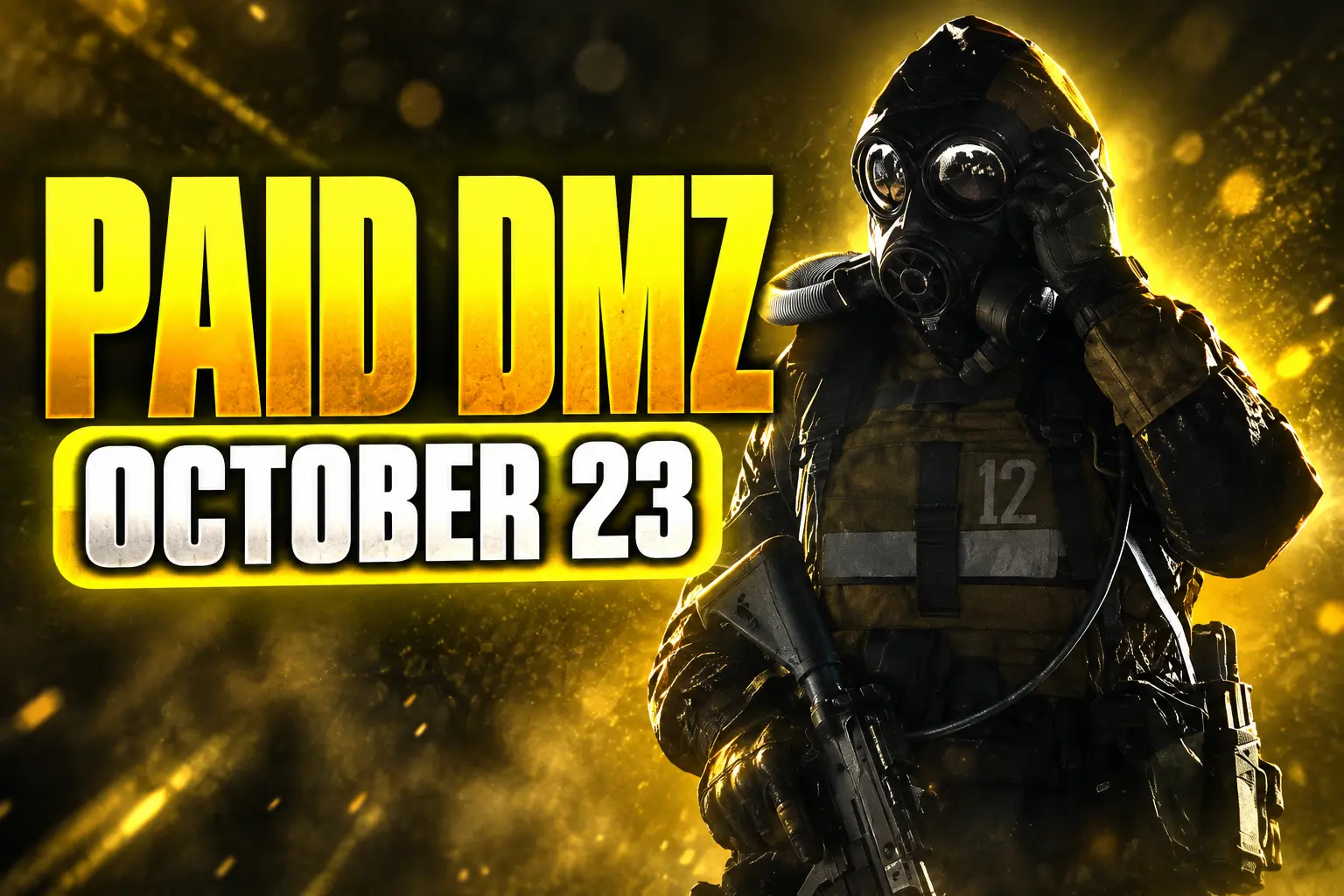
Modern Warfare 4 ships DMZ on October 23, 2026 as a paid extraction mode, not a free Warzone playlist. Infinity Ward is putting the third slot of a yearly Call of Duty on a persistent exclusion zone with a hub you upgrade between runs. That is a different product from the 2022 experiment that lived on a Warzone menu until Activision stopped feeding it.
Geoff Smith, multiplayer creative director at Infinity Ward, told press in May the studio “actually made a proper DMZ this time.” The systems published since then, from a Forward Operating Base to cash-priced guns and MIA rescues, are the bet that extraction can hold a paid audience after zombies owned that slot for three yearly games.
Infinity Ward Is Betting on a Paid Extraction Pillar
Joe Cecot, studio multiplayer creative director, has been blunt about the hole in the first mode. The team wanted a months-long climb, the kind of slow power curve extraction games sell, and could not ship it while DMZ was still a live beta bolted onto Warzone.
I think one of the things in the original DMZ that we wanted but we couldn’t get to was meaningful player growth.
Joe Cecot, Studio Multiplayer Creative Director, Infinity Ward
He described that climb as a hero’s journey that runs across many deployments instead of a single match. In the persistent inventory and player growth interview, he said each Active Duty operator now keeps a backpack, a loadout, and a trait tree, so a lost main can be replaced by a cash mule until you buy the original back.
Smith went further in May, calling DMZ “a full-featured game inside Modern Warfare.” That line only works if people keep logging into Hajin after the campaign credits and after the 6v6 maps get old. Dedicated DMZ Rank, FOB stations that unlock with XP, and story missions written by the single-player team are how Infinity Ward plans to make a third menu tile feel like a second game.
The wager has a cost on the other side. Anyone who treated the old DMZ as a free evening playlist now has to buy Modern Warfare 4. The mode is not listed as free-to-play. It is also the year zombies does not get the third slot, so the extraction crowd inherits the hours that used to go to a different sandbox.
Inside the Forward Operating Base
The FOB is the part of this bet you can see. Players return there before and after every run, walk it in third person with their squad, and spend cash and materials on the next drop. Infinity Ward has not shown the space yet. The June 6 Hajin exclusion zone deep dive still lists the stations that are supposed to turn a wipe into a season.
STATIONS YOU UNLOCK BETWEEN RUNS
- Stash and loadout: Weapons, gear, valuables, and special items sit between deployments, with each Active Duty operator holding a separate backpack and loadout, and a free loadout for anyone who wants to drop immediately.
- Wallet: Mission and operation cash wires back to the FOB and pays for guns, attachments, Lieutenant intel, and MIA rescues, which is why one operator can be built as a cash mule.
- 3D Printer: Extracted ingredients print night vision, plate carriers, backpacks, killstreaks, and other gear, while recipes found in Hajin upgrade what the printer can make. Primary, secondary, and melee guns stay out of it.
- Gunsmith and vendor: Guns and attachments are bought with cash, up to five attachments plus an Apex part, while eight-attachment weapons exist inside Hajin, and a rotating vendor sells ready rifles that do not block your loot path.
- Boss Board and bounties: Pay for Lieutenant intel or climb Hunt Towers, then extract dog tags that fill the board and paint a target on you, while a leaderboard tracks the most dangerous players in the zone.
Weapon levels still track with multiplayer, so a rifle you grind in 6v6 is the same gun you pay to kit in DMZ. Attachments that matter in the exclusion zone, suppressors, drum mags, thermal glass, cost more because taking someone else’s build is supposed to feel like a robbery. That is a long way from the old cooldown slot that handed a kitted gun back after a timer.
XP still lands if you die. Cecot said the team is not paying half XP on a failed extract. Rank unlocks stations, stash space, printer recipes, and the three Trait Trees that sit on each operator, combat, scavenging, and the rest of the kit. The FOB is also the onboarding trick. A blinking printer after a rank-up is how a new squad is supposed to learn the mode without reading a wiki.
Hajin Continues the Campaign After the Credits
Hajin is the map that has to carry all of that. Infinity Ward is treating it as a character, a tri-point exclusion zone on the Korean peninsula after the Modern Warfare 4 campaign, soaked in abandoned tech and rival operators. You drop as a shadow CIA asset, and the blog’s own pitch is loot, fight, negotiate, betray, and leave with what you can carry.
The zone is built for people who wander. Rain cuts sightlines, fog turns known roads into guesses, and overcast weather changes how you move. The Fallout reactor, a sealed prison, the remains of Hajin City, a defended military base, and a derelict casino with a vault are the named places so far. Eastern fallout needs a gas mask. Side jobs include repairing trucks, chasing supply drops, and climbing broken radio towers.
Story Missions continue the campaign on a live server, so a squad on a narrative beat shares the map with people hunting Lieutenants or cracking the casino. Dynamic Operations roll multi-step tasks each match. Free Roam is the old DMZ habit, go in and make your own mess. Squad fill tries to pair you with players who queued for the same job, which is a quiet admission that randoms walking off your story mission killed a lot of 2022 runs.
On June 7, 2026, Call of Duty closed the Xbox Games Showcase with the first look at that world. The account also said a full DMZ reveal was still coming before launch.
https://x.com/CallofDuty/status/2063683591481983466
AI is the other half of the living-world pitch. Squads coordinate, take cover, and break line of sight. Convoys roll, choppers work the sky, and the threat meter answers noise with heavier troops, then Deathstalkers, tanks, drone swarms, Juggernauts, and elite strike teams. Cecot’s phrase for it is simple: if you push, the world pushes back. Jacky Reynolds, lead game designer, wants that sandbox to swallow Call of Duty toys other extraction games do not have, including printed killstreaks such as Crossfire, a first-person A-10 pass.
Why Activision Stopped Updating DMZ in 2023
The rebuild only makes sense if you remember how the first one ended. DMZ launched in 2022 with Modern Warfare 2 and Warzone 2.0 as a public beta, a lighter take on extraction that ran on Al Mazrah and asked a lot less of you than Tarkov. People stayed for the weird mid-match deals and the chance to leave a fight. They also watched content slow, watched progress get yanked around season resets, and watched AI and player hunting turn a “chill” third mode into a second battle royale.
On December 1, 2023, Activision ended new DMZ content. The company thanked players for feedback on “the DMZ Beta,” said it was taking those lessons into future open-world work, and pointed the audience at Modern Warfare Zombies. The mode stayed playable through Warzone, but it no longer synced with new battle passes or new Warzone toys. A live experiment became a museum exhibit.
FROM FREE BETA TO PAID PILLAR
- 2022: DMZ launches as a free beta with Modern Warfare 2 and Warzone 2.0.
- December 1, 2023: Activision stops new content and cuts the mode off from Modern Warfare 3 and Warzone progression.
- May 2026: Smith tells press Infinity Ward made a proper DMZ, with weekly boards for the top 50 killers and top 50 bounty hunters.
- June 6, 2026: Call of Duty publishes the Hajin systems blog.
- June 7, 2026: The Xbox Games Showcase airs the first Hajin footage, with a later full reveal promised.
- August 28, 2026: Open Beta Weekend Two opens at 10:00 AM PT, with no DMZ on the playlist.
- October 16, 2026: Digital pre-orders get campaign early access.
- October 23, 2026: Modern Warfare 4 and DMZ launch on Xbox Series X|S, PlayStation 5, PC, and Nintendo Switch 2.
Cecot said the studio has been playing and watching that beta for three plus years. The list of fixes maps onto the old complaints with almost no leftover mystery. People did not know what to do, so Story Missions and Dynamic Operations sit on the front end. People lost the plot when they died, so XP keeps counting. People wanted a stash that lasted, so the FOB exists. The remaining argument, the one that never died on the old map, is PvP. Some players still want a PvE Hajin, and Infinity Ward has not advertised that playlist.
Failed Runs Leave Operators Recoverable for Cash
Extraction only stays tense if death costs something. Infinity Ward is trying to keep the sting without sending casual squads back to 6v6. Failed extracts still dump gear. Operators can go MIA. Cash at the FOB then buys a rescue so the trait tree and the backpack are not a total loss. That is the pressure valve the 2022 mode never really had.
THE SOLO SAFETY NET
- Health cap: You spawn at 150, with slow regen if you break contact before you go down.
- Tourniquet: One is always on you, even without a self-revive, and it stands you up wounded until you find a kit or a bandage.
- Stealth meter: An audio cue and a white-to-yellow-to-orange HUD pip tell you an AI is spotting you, so a solo can drop, freeze the meter, and pick a fight later.
Cecot’s example is a Lieutenant that downs you because you were sloppy. You crawl off, the AI moves on, you bandage in a corner, and you decide whether to go back. Proximity chat now has distance falloff, direction, and interior reverb, which is how a casino vault is supposed to produce the stories the genre sells. He still tells one from the old mode: solo, hunted, into a boat, onto the last bird, spamming friendly, and a stranger saying the mode was “freakin’ sick” as they lifted off. That is the product. The new rules exist so a run like that is not also the last run of your week.
Paid infils set the tone before you even land. Walk in quiet, come in loud on a helicopter or a large plane, or buy a vehicle drop. Once you are famous for hunting other operators, other squads can buy intel on you the way they buy Lieutenant pins. Dog tags on a hot exfil are bait. The mode is still PvPvE. The softer wipe is how Infinity Ward argues a parent with one hour can still climb a season.
The Open Beta Never Opened Hajin
For a pillar this large, nobody from the public has been allowed to play it. Activision’s Open Beta Weekend Two intel listed a campaign mission, the first in a Call of Duty beta, and seven 6v6 modes, Team Deathmatch, Domination, Hardpoint, Kill Confirmed, Search and Destroy, Inflation, and Hijack. DMZ is not on that list. Weekend Two ran from 10:00 AM PT on August 28, 2026 to 10:00 AM PT on September 1, 2026. The June promise of a fuller reveal has not been matched by a public drop into Hajin.
THE 2022 BETA VERSUS MW4 DMZ
| System | 2022 DMZ Beta | Modern Warfare 4 DMZ |
|---|---|---|
| Access | Free through Warzone | Requires Modern Warfare 4 |
| Label | Public beta | Day-one mode, not called a beta |
| Support | New content stopped December 1, 2023 | Launches October 23, 2026 |
| Inventory | No persistent stash at launch | Persistent backpack, Stash, traits |
| Hub | None | Upgradable FOB with printer and boards |
| Death | Gear gone, thin recovery | MIA rescue for cash, full XP on a failed run |
| Objectives | Missions with weak world marking | Story Missions, Dynamic Operations, Free Roam |
The paid wall is the other half of the table. Vault Edition is $99.99 and includes a DMZ Deployment Bonus that, as of September 9, 2026, is still described as additional bonus content, with players still asking what that actually is. Digital pre-orders unlock campaign early access on October 16, 2026. Modern Warfare 4 skips Game Pass on day one, and the Xbox product page says it is not on Game Pass this year. Play Anywhere covers Xbox consoles and PC. Nintendo Switch 2 is in the launch set. PlayStation 4 and Xbox One are not.
That package is how you read what the 2022 beta was missing against the business model. Persistence, a hub, and clearer jobs are the design answer. Charging for the mode, keeping it off the open beta, and keeping it off Game Pass are the commercial answer. If Hajin holds, Infinity Ward gets a third game inside the SKU that can run for a year. If it does not, the studio will have spent a campaign-tied map and a social hub on a playlist most of the audience never got to try for free.
October 23, 2026 is the first date that actually tests the bet. Until then, DMZ is a documented machine, a trailer, and a promise that the next reveal will finally put players in Hajin.

Windows 11 26H2 Turns Settings Backup On by Default

The Gears 2 PC Port Epic Refused to Ship

Ghost Recon Wildlands Returns at 4K as a Catalog Product

Waterpark Simulator Keeps the $12.99 Price After 1.0

Nurix Puts NuPlay on Microsoft Marketplace to Reach Azure Buyers

Warzone Leaves Xbox One and PS4 After Season 06

Microsoft AI Was Set Free to Build Its Own Frontier

Microsoft IQ Turns Workplace Data Into a Metered Agent Brain

Xbox Games Showcase 2026 Split the Catalog in Two

Nadella Banned Addiction Talk While Scout Kept Heartbeat
-
 NEWS4 months ago
Warzone Leaves Xbox One and PS4 After Season 06
-
 NEWS4 months ago
Microsoft AI Was Set Free to Build Its Own Frontier
-
 MICROSOFT 3654 months ago
Microsoft IQ Turns Workplace Data Into a Metered Agent Brain
-
 NEWS4 months ago
Xbox Games Showcase 2026 Split the Catalog in Two
-
 MICROSOFT 3654 months ago
Nadella Banned Addiction Talk While Scout Kept Heartbeat
-

 NEWS4 months ago
Modern Warfare 4 Splits Its Audience Before the October Launch
-

 NEWS4 months ago
Dragonwilds Hits Xbox, but Steam Saves Stay Put
-

 NEWS4 months ago
Microsoft Build 2026 Unbundled Local AI From Copilot+ PCs